Touring Gear
A detailed look at the bike, bags, camping kit and miscellaneous gear that I hope sustains us for 3,730 miles.
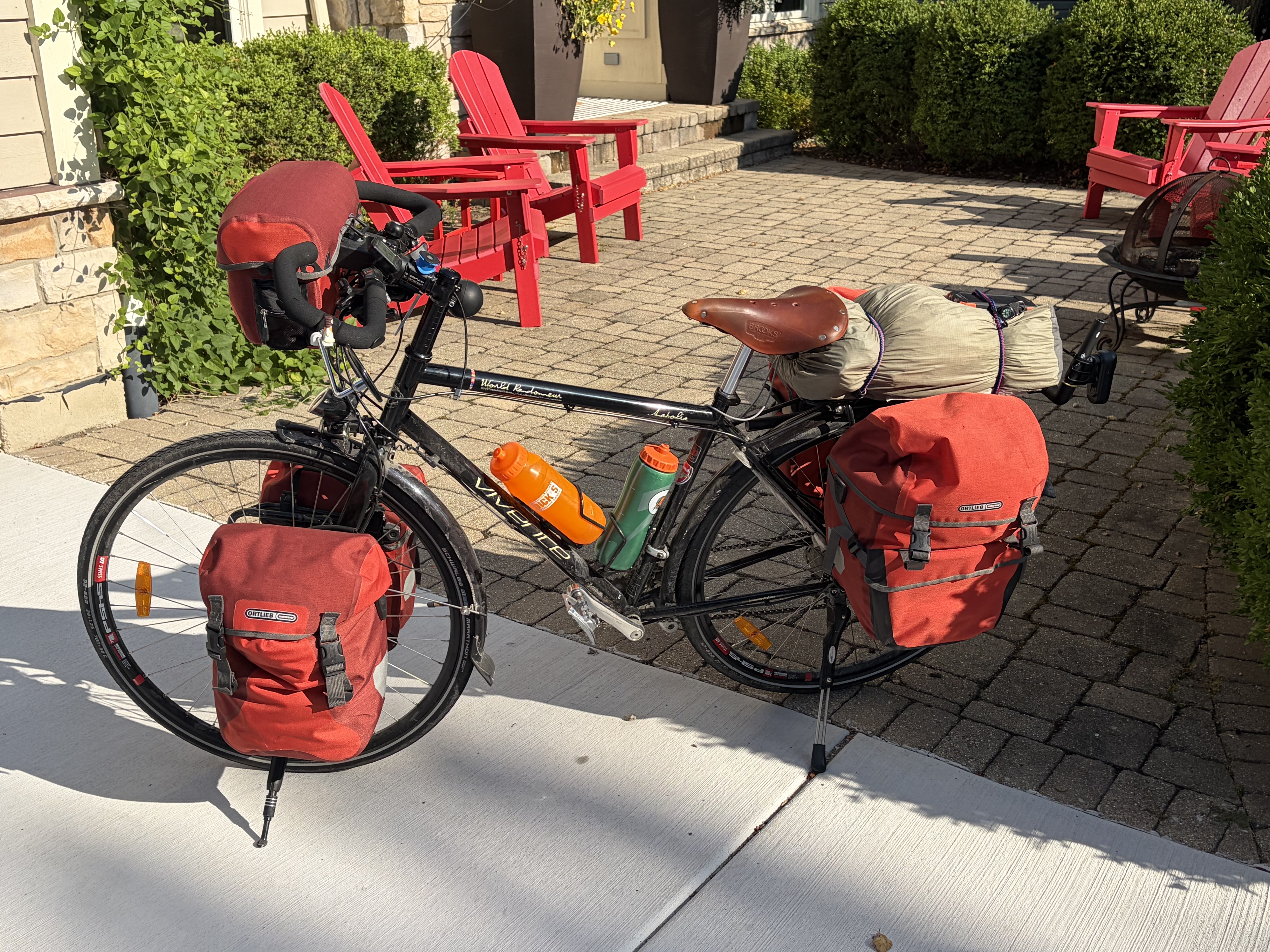
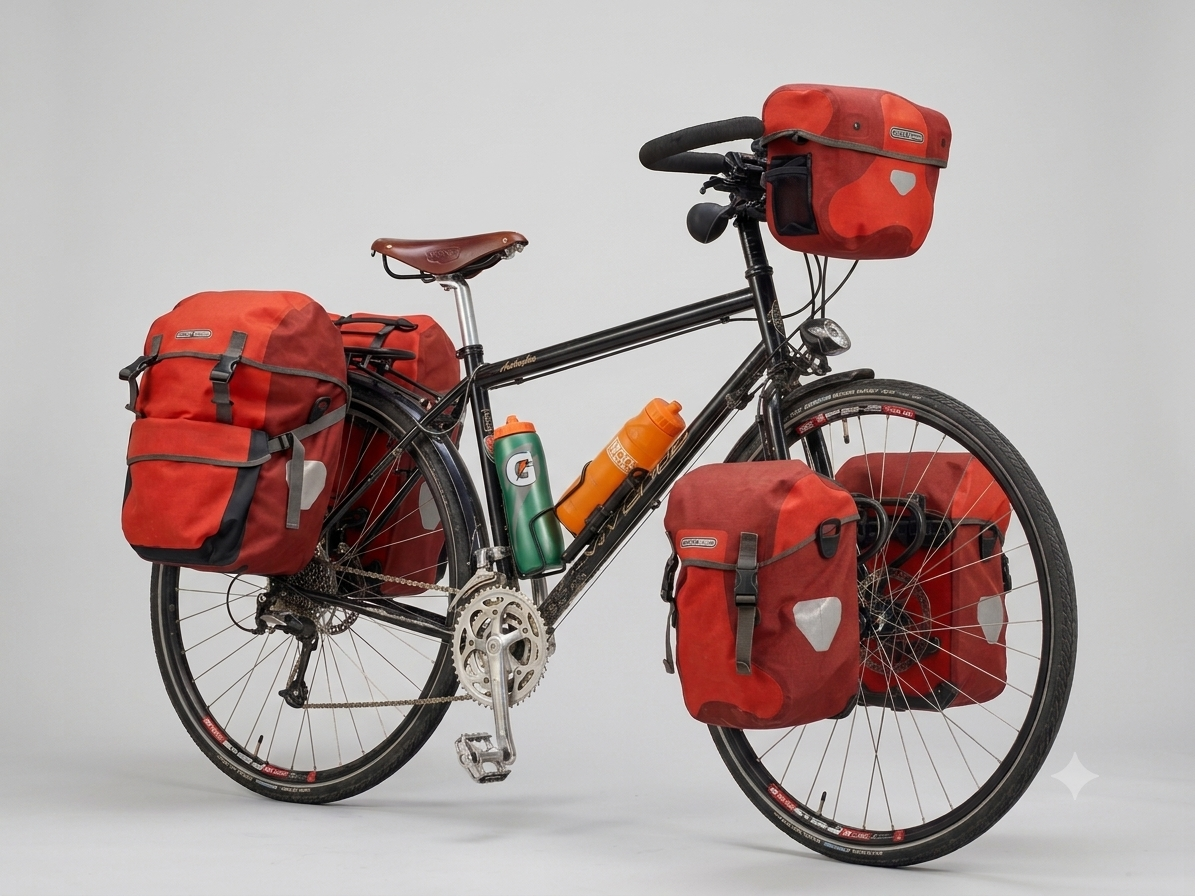
The Bike: Vivente Anatolio World Randonmeur
This Vivente bike is my trusty steed for this journey — a steel-framed touring workhorse built to carry heavy loads across thousands of miles. Its relaxed geometry keeps you comfortable in the saddle for long days, while threaded braze-ons and a low-trail design make it a capable loaded touring bike. A randonneur refers to a rider who participates in randonneuring, a distinct discipline of self-supported, non-competitive long-distance endurance riding. Randonneurs must carry their own gear, tools, and extra clothing, and manage their own navigation, food, and mechanical repairs – support crews are strictly prohibited. Seems to describe our journey! (Note: both Geeto and Lecy are riding new aluminum frame Trek Checkpoint’s. Their rides are lighter, and brand new; my steed is 6 years old and bought for cheap barely used on FB Marketplace, but I have some bike envy.) However… my trusty steed is equipped with a dynometer on the front wheel that powers the headlamp or can be switched to provide USB power supply to phone, headlamp,
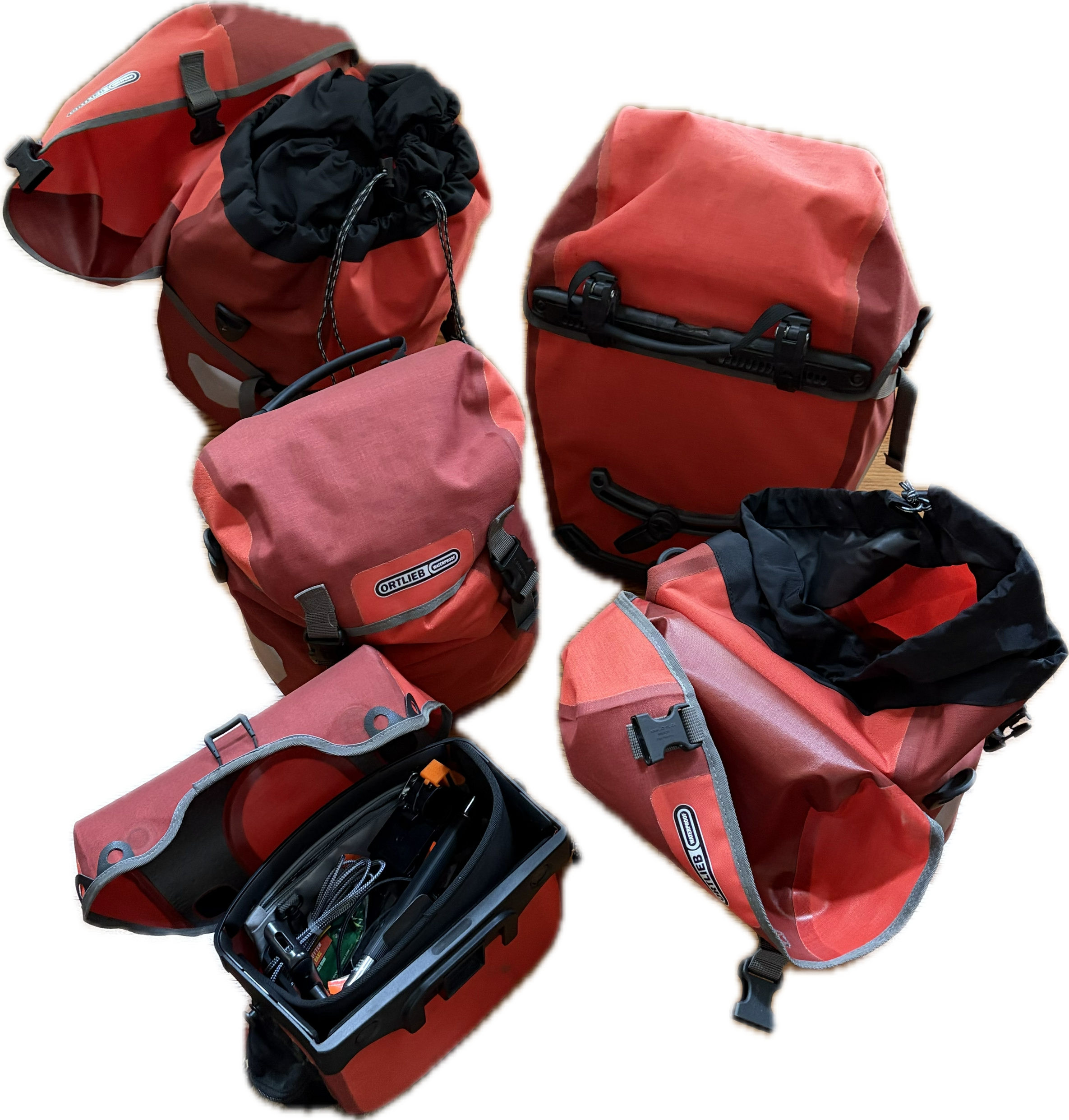
Bags (Panniers): Ortlieb Bike-Packers
Waterproof storage is non-negotiable on a cross-country tour. The Ortlieb Bike-Packer Plus panniers clip to the front and rear racks. They have top-loading lid flap closure with dual buckles and outer front pockets that seal out rain and road mist. Each rear bag holds 21 liters, front bags 15 liters and handlebar bag another 7 liters for 79 liters total storage space and good weight distribution.
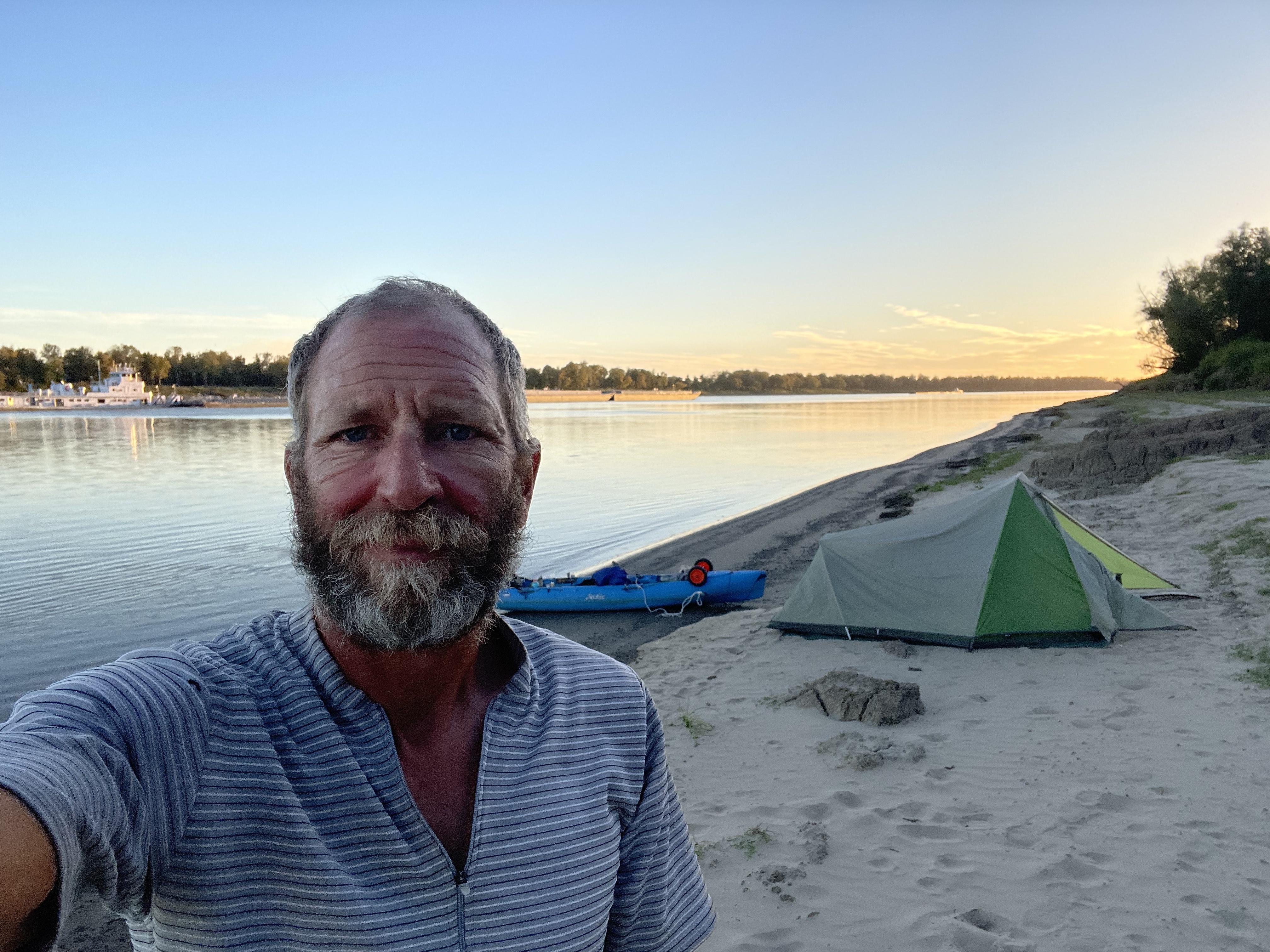
Shelter: Sierra Designs Clip Flashlight 2
My Sierra Designs tent has been home away from home for many excursions for 30+ years – this tent has been to the top of the Grand Teton, to the floor of the Grand Canyon, and it kept me dry and comfy for 65 nights paddling the length of the Mississippi River. It weighs three pounds and it packs small enough to strap to the rear rack above the panniers. With my EXBED sleeping pad, Kelty Rambler 50 degree bag and NorEast ultralite inflatable pillow, my accommodations provide for a comfy place for late night blogging (and a little sleep when I can keep anxiety about the next day’s challenges at bay).
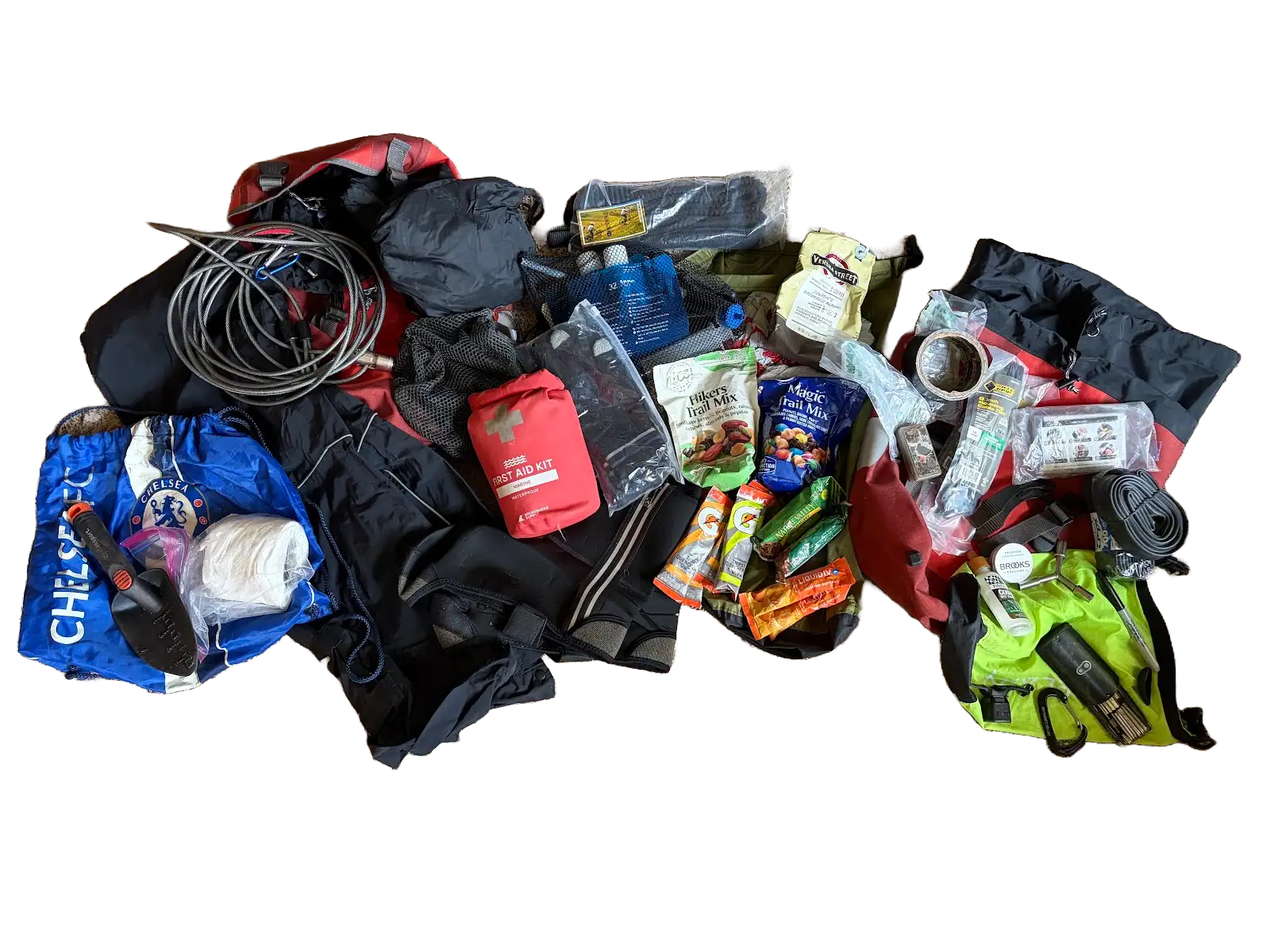
Fuel, Safety & Security: Self-Sufficiency (2 front paniers)
This pile covers the miscellaneous-but-essential category: A first aid kit, a cable lock to secure the bikes at stops, a water filter in case we are forced to drink from a river or drainage ditch along the way (there’s some long stretches without provisions through Montana and North Dakota). I also have some multipurpose bike tools, 2 spare innertubes, tire levers, plastic zip ties, and the all-purpose duct tape (every engineers friend) for roadside repairs. This bag holds my rain and cold weather gear (Gortex pants, rain jacket, warm gloves and skull cap) in case the weather is less than perfect. Thanks to my friend (and Eco-challenge adventurer) Tim Suter, I’ve just added an elastic tow rope in case somebody really bonks, or goes blind, or we pick up a toddler on training wheels who can’t keep up on his own. On the nutrition side: trail mix, granola bars, Gatorade, Liquid IV… just stuff to provide fuel between real meals in towns along the way. And, of course coffee as a civilized way to start every day. Lastly, a roll of toilet paper and plastic spade for regular morning routine in remote locations; I’m an Arsenal fan, so I keep these unglamorous implements in a Chelsea a drawstring bag (I’m sure Cam, my fellow Gunner fan understands – just sorry I don’t have a Tottenham bag instead!)
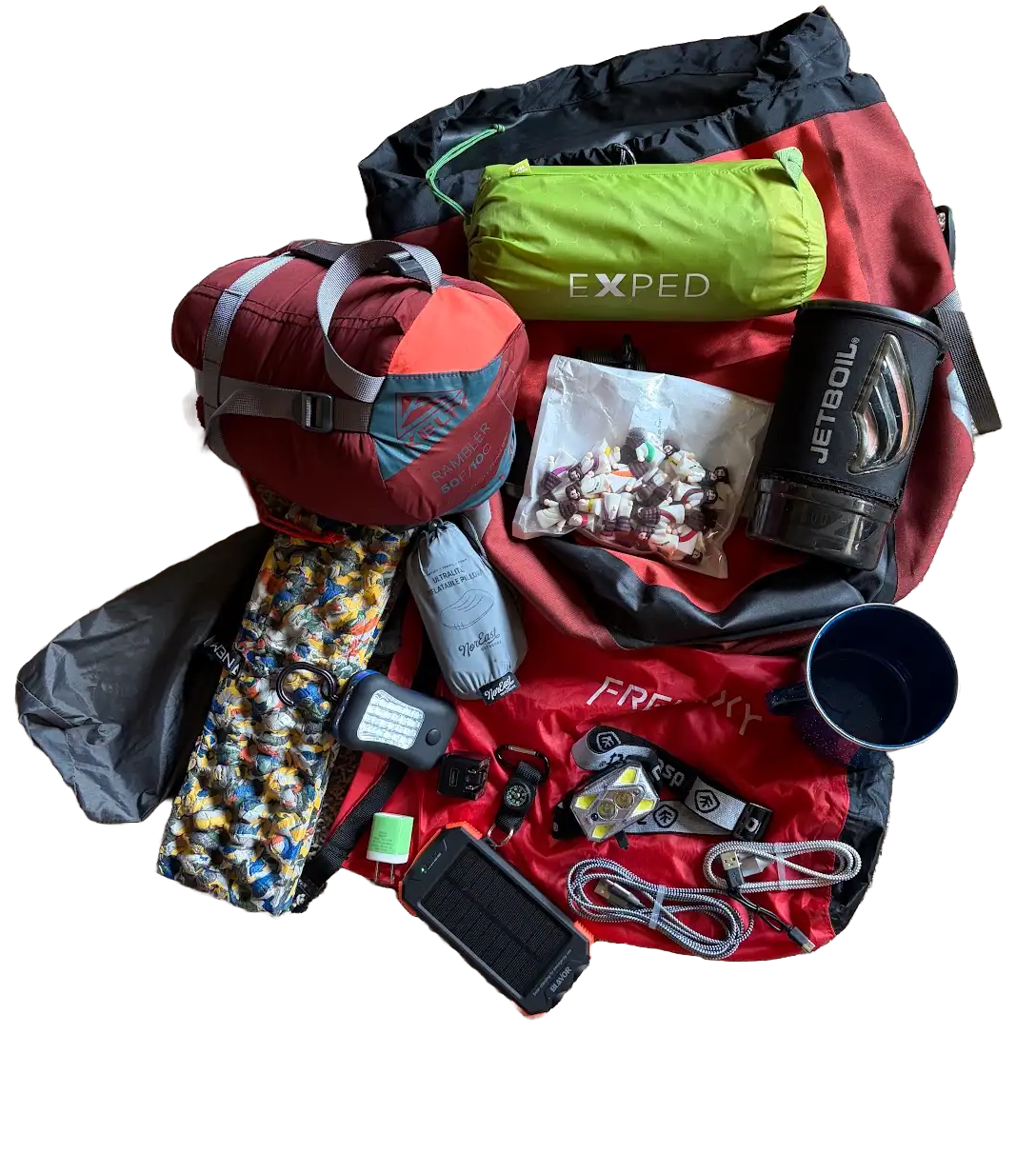
Camp & Overnight Gear (in 1 rear panier)
This covers the essentials for sleeping out on the road: my inflatable Exped sleeping pad, a Rambler 50° bag, inflatable pillow, and a small foam pad (in lieu of a fancy chair that Lecy will brag about often as he slaves over spreadsheets at camp). Stainless steel enameled coffee cup and Jetboil for morning coffee (though we likely will have a few freeze dried dinner nights in the wilderness). A small dry-bag holds a few electronics: headlamp, a small lantern that hangs in the tent or a nearby branch, a spare taillight, a few charging cords, and a solar battery bank with compass for emergency charging and in case I get lost in the woods with my Chelsea bag.
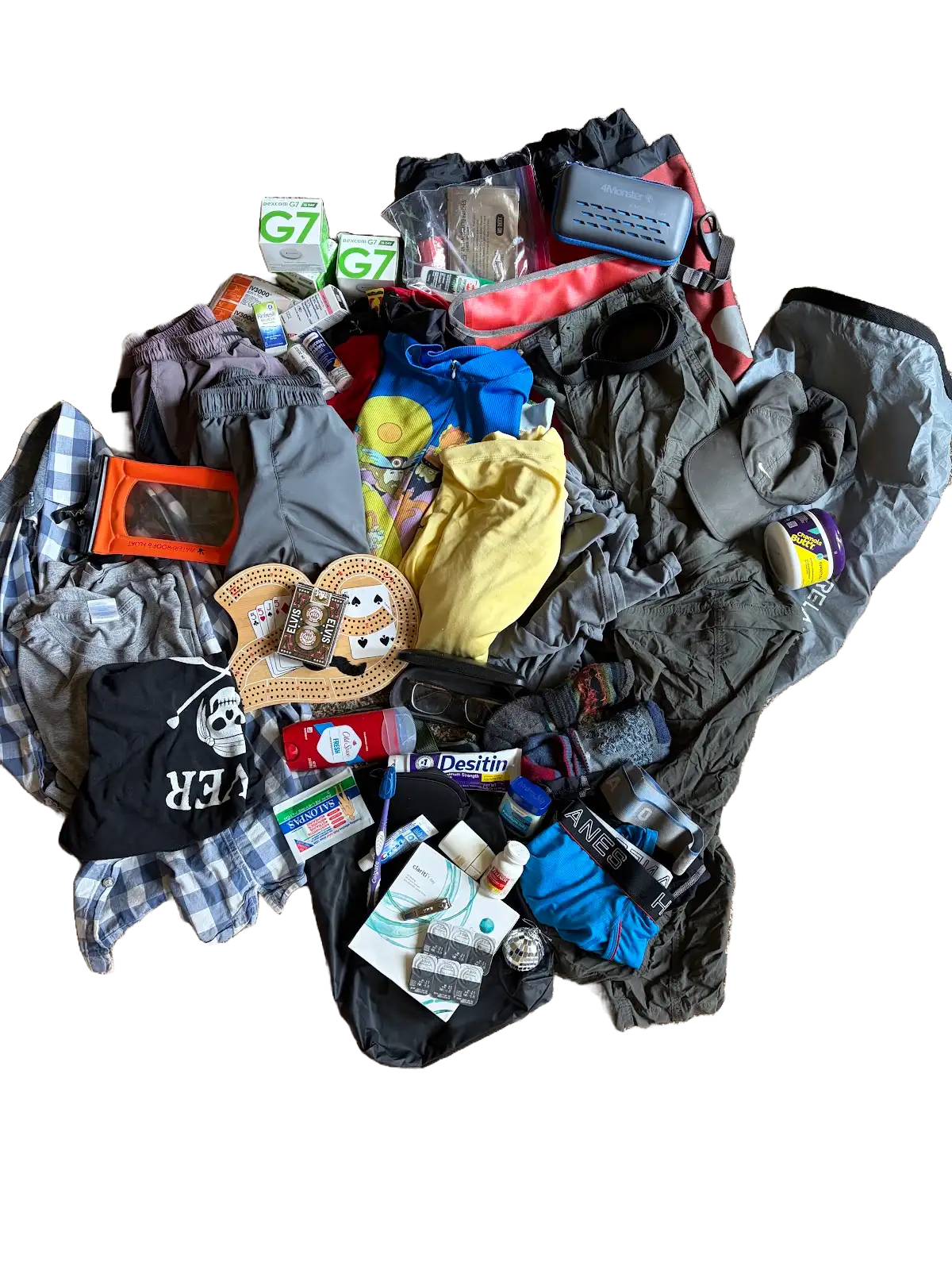
Clothing & Care: All-Condition Bikepack (in 1 rear panier)
Clothing packs light but covers the bases: 2 pairs of riding shorts, wool socks and jerseys alternate riding days. Zip-off Columbia hiking pants, 2 t-shirts, 2 pairs underwear, one long sleeve shirt and a plaid button-down for town stops. Enough to stay comfortable without overpacking.
Personal care leans into the realities of long days in the saddle: Eurostyle Chamois Buttr, Desitin and Vaseline to keep things lubricated and chafe-free! Salonpas pain relief patches, Tylenol, aspirin, toothbrush and paste, deodorant, sunscreen, nail clippers, contact lenses (glasses backup), and some eye wash, lubricant and steroid (in case of another corneal abrasion incident!). Also, a waterproof phone case, camp towel, cap and mosquito repellent options. Hopefully everything I need to stay functional and human after a hard day of riding.
For diabetes management, a Dexcom G7 continuous glucose monitor keeps real-time tabs on blood sugar. These, along with adhesive over-patches last 15-days each, so I’ll need 4 of these before resupply on my way past home. This is my most critical gear for riding confidently and safely while maintaining energy levels and fueling strategy.
The cribbage board and deck of Elvis playing cards are for nightly competition. Geeto, Lecy and I intend to ride as an efficient train through each day, taking equal turns leading and drafting. But after the ride day is over, competition can ensue over a few games of cribbage (I’ll be sure to share the results). I’ve also packed a small disco ball in case we have need for a celebration that warrants a dance party; I was never a Boy Scout but I’m sure this is what they would expect to Be Prepared.
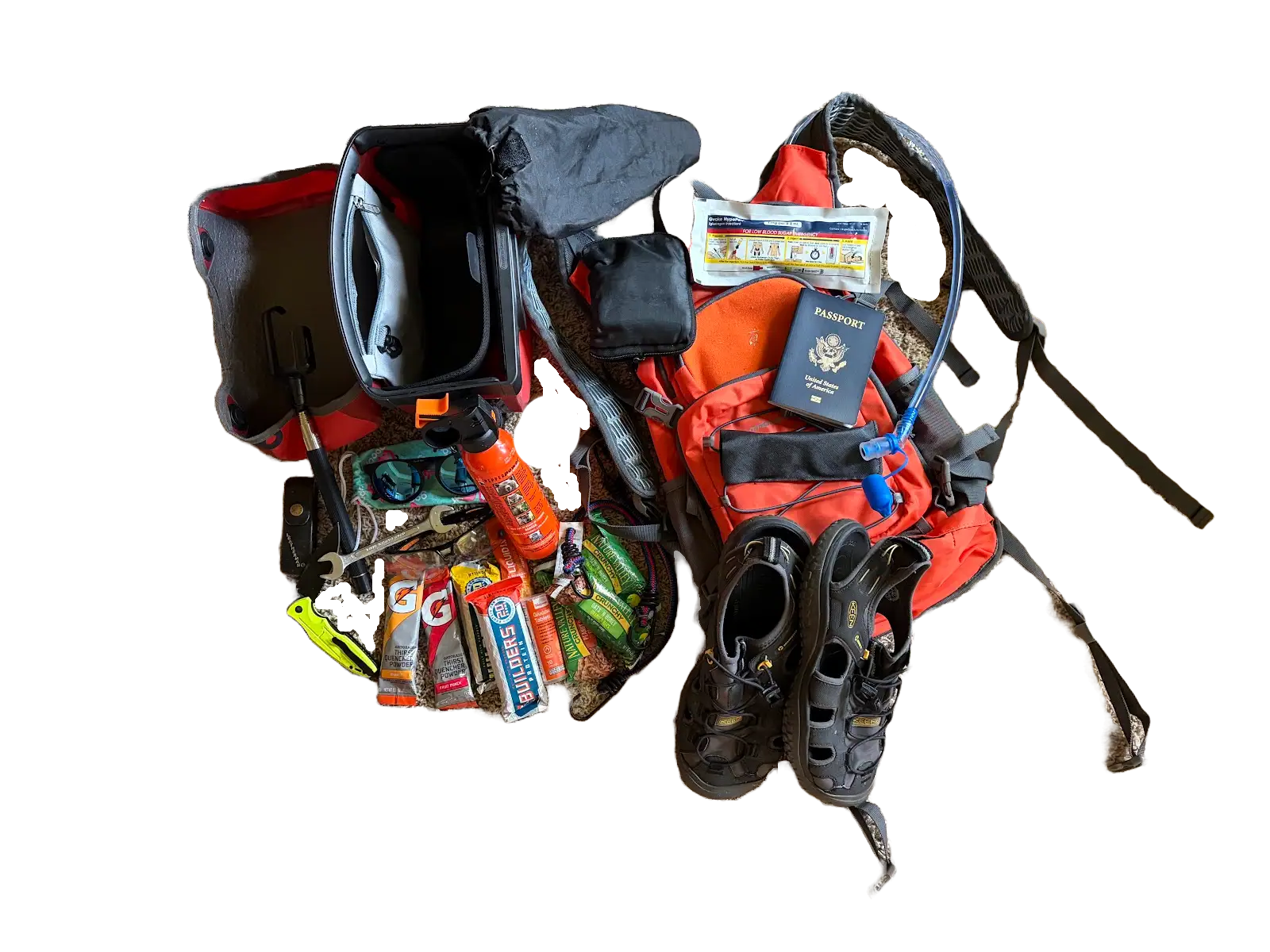
Urgent Items: When Speed Matters (Front Bag & Backpack)
The handlebar bag and hydration pack carry everything needed quickly (I don’t want to stop and dig through panniers for bear spray!) In addition to the bear spray, the front bag carries snacks, Gatorade and glucose tablets, sunglasses and clear safety glasses, Leatherman multi-tool, folding knife and selfie stick (just to make my kids recall some cringeworthy memories). The hydration pack holds 3 liters of water (along with 2 one liter bottles, this should be enough for 5 or 6 hours in the hottest weather). This backpack also contains my wallet, money, passport, reading glasses (which I hope not to need as the Elgin Vision Center has introduced me to multifocal contact lenses – thanks Jeff!). One pocket in this bag also contains a standalone glucose meter and the Glucagon emergency pen (though I don’t intend to give Geeto the satisfaction of using it on me.) (Note: a vinyl cover for my Brooks saddle and my Keen sandals are also in this photo because I forgot to include them in the rear panier photo above. The cover keeps the leather seat dry when it’s not covered with my backside; the sandals let me walk around town without the annoying click-clack of my Bontrager biking shoes.)

